Top 10 Oil Filled Transformer Manufacturers Worldwide
Choosing among the Top 10 Oil Filled Transformer Manufacturers Worldwide requires more than comparing production volume. Buyers must examine engineering depth, tested materials, service coverage, and long-term field performance. An Oil Filled Transformer may operate quietly for decades, yet one overlooked detail can cause costly interruptions.
Oil quality matters. So does tank welding. Conservator design, insulation systems, cooling performance, and bushing reliability deserve close attention. Experienced manufacturers also provide temperature-rise data, short-circuit strength, factory test records, and practical maintenance guidance. These details reveal more than polished marketing claims.
Electrical engineer Martin J. Heathcote, author of The J&P Transformer Book, described transformers as “the link between generation, transmission and utilization of electrical energy.” This principle still guides serious purchasing decisions. A manufacturer should understand the entire chain, not merely assemble a metal tank around a core.
This ranking examines leading global suppliers through a practical lens. It considers manufacturing capability, product range, grid experience, customization, efficiency, and after-sales support. Regional availability also matters. A technically excellent supplier may still disappoint when spare parts travel slowly or local technicians lack training.
No ranking is perfect. Market data changes, and public disclosures remain uneven. Some smaller manufacturers may deserve more attention than they receive. That limitation deserves honesty. Still, the comparison offers a useful starting point for utilities, industrial operators, renewable-energy developers, and procurement teams seeking dependable Oil Filled Transformer solutions. The real test comes under load, heat, moisture, and time.
What Is an Oil-Filled Transformer?
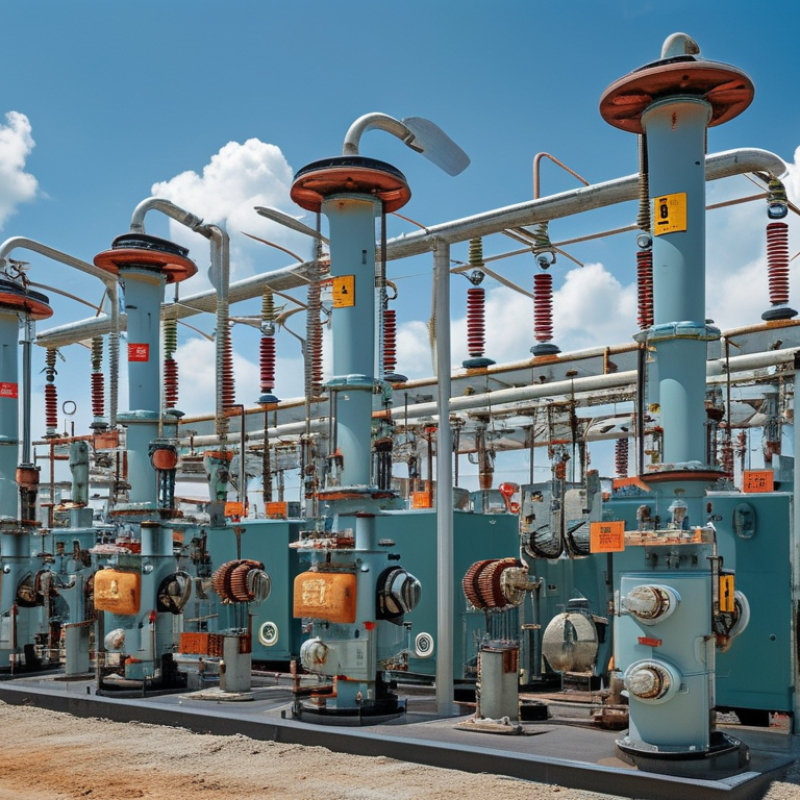
An oil-filled transformer transfers electrical energy between circuits through electromagnetic induction. Its windings sit inside a sealed or conservator-equipped tank filled with insulating liquid. The liquid performs two jobs: it strengthens insulation and carries heat from the windings to the tank walls, radiators, or cooling fans.
Most units use refined mineral oil, although ester-based fluids are increasingly considered where fire safety and biodegradability matter. IEC 60076 describes transformer design, testing, and performance requirements. Field engineers still inspect oil quality carefully. Moisture, dissolved gases, acidity, and particle contamination can reveal overheating or insulation damage. A rating plate never tells the whole story.
The U.S. Department of Energy’s transformer analysis estimates distribution-transformer losses at roughly 2.5% of national electricity consumption. That figure explains why efficiency matters, even when a transformer appears idle. The International Energy Agency’s Electricity 2024 report also projects strong electricity-demand growth through 2026, increasing pressure on grid equipment. Larger loads may require better cooling, stronger insulation, and more dependable monitoring.
An oil-filled transformer is not maintenance-free. That assumption causes trouble. Leaking seals, overloaded windings, or neglected oil tests can shorten service life. Installation conditions matter too, including ambient temperature, altitude, ventilation, and fire-protection planning. Some older designs remain reliable, but age alone cannot prove safety. Careful testing should guide replacement decisions.
Key Criteria for Ranking Global Manufacturers
Top 10 Oil Filled Transformer Manufacturers Worldwide: Key Criteria for Ranking Global Manufacturers
Ranking oil filled transformer manufacturers requires more than comparing revenue or factory size. Technical performance should carry the greatest weight. Evaluators should examine compliance with IEC 60076, IEEE C57.12.00, insulation life, tested load losses, temperature rise, and short-circuit strength. A transformer is not judged in a brochure.
Field evidence matters. Reviewers should inspect production lines, oil processing controls, welding quality, and routine test records. Site acceptance data can reveal problems hidden by marketing claims. Service response also deserves attention, especially for transformers installed in remote substations. Spare-part availability and documented failure rates provide practical evidence of reliability.
Market conditions add another layer. The International Energy Agency’s World Energy Investment 2024 report states that annual global grid investment must exceed 600 billion dollars by 2030 to support expanding electricity systems. Its Electricity 2024 report also projects global electricity demand growth of about 4% annually through 2026. These figures increase demand for dependable transformer capacity. Environmental performance should therefore include low-loss designs, leak prevention, recyclable materials, and verified lifecycle data. Price still matters, but cheap equipment can become expensive after one overheating event. A ranking can never be perfect. Public reports rarely capture every factory audit, regional service weakness, or delayed delivery. That limitation should remain visible.
Profiles of the Top 10 Oil-Filled Transformer Manufacturers
The top 10 oil-filled transformer manufacturers reflect different strengths across the global power industry. One focuses on high-voltage grid equipment. Another specializes in compact distribution transformers for crowded urban networks. A third is known for custom units serving renewable energy projects. Several manufacturers combine decades of field experience with modern testing laboratories. Their factories typically use vacuum drying, sealed tank construction, and automated winding systems. These processes help reduce moisture, insulation weakness, and early operating failures.
Some profiled manufacturers stand out through strong engineering support. They study load patterns, ambient temperatures, altitude, and transport conditions before recommending a transformer. Others offer mineral oil, ester fluid, or low-loss core options. Their service teams inspect bushings, oil quality, temperature indicators, and protection devices during commissioning. Practical reliability matters here. A technically impressive transformer can still disappoint if spare parts arrive late or documentation is unclear. Not every factory performs equally well in every region. That is worth remembering.
Tips: Compare verified test records, warranty terms, service coverage, and delivery history. Ask for references from installations with similar voltage and capacity. Review noise levels, cooling design, oil containment, and maintenance access. A lower purchase price may hide higher operating costs. Buyers should also question vague efficiency claims and request independent inspection when project risks are significant.
Core Technologies and Product Applications
Oil-filled transformer manufacturers are competing through core efficiency, thermal control, and application-specific design. The strongest suppliers typically use grain-oriented electrical steel, low-loss joints, and sealed tanks. Some advanced models use amorphous-metal cores to reduce no-load losses. That matters when transformers remain energized for years.
According to the IEA’s Electricity 2024 report, global electricity demand is expected to grow by about 4% in 2024 and 2025. This growth increases demand for reliable transformers in renewable-energy plants, substations, factories, and data centers. Oil-filled units support high-voltage transmission and medium-voltage distribution because their fluid provides insulation and removes heat. ONAN cooling suits compact installations. ONAF cooling supports heavier loads. On-load tap changers help maintain stable voltage during changing demand.
Product selection also depends on fluid technology. Mineral oil remains common, while natural and synthetic ester fluids offer improved fire performance and biodegradability. Monitoring systems now track winding temperature, dissolved gases, moisture, and partial discharge. These features can reveal insulation problems before failure. IEC 60076 and IEEE transformer standards guide testing, insulation coordination, and performance evaluation.
The U.S. Department of Energy’s 2024 distribution-transformer rule estimated major long-term energy savings from higher-efficiency designs. However, rankings remain imperfect. Published efficiency figures may use different loads, temperatures, and testing assumptions. A transformer that performs well in a laboratory may need extra cooling in a dusty solar farm or coastal substation. Real application data should matter more than brochure claims. Some buyers still overlook maintenance access. That mistake can become expensive.
How to Select the Right Oil-Filled Transformer Manufacturer
Selecting the right oil-filled transformer manufacturer requires more than comparing prices. Start with the transformer’s actual duty: voltage ratio, rated power, cooling method, installation altitude, and expected load profile. A manufacturer should explain each choice in clear technical language.
Request verified test records, not attractive brochures. These records should cover winding resistance, insulation performance, leakage, temperature rise, and transformer oil quality. Check whether testing follows recognized electrical standards and whether calibrated equipment is used. Factory experience matters too. Ask how long the engineering team has designed similar units, especially for humid sites, industrial loads, or frequent voltage changes.
Inspect the production process when possible. Look for clean winding areas, controlled drying equipment, sealed oil handling, and traceable component records. A serious supplier can provide drawings, inspection stages, delivery controls, spare-part guidance, and a practical maintenance schedule. Speak with recent customers about noise, oil leakage, delivery accuracy, and service response. Real feedback is often less polished, but more useful.
Do not select the lowest quotation automatically. A cheaper unit may use thinner materials, weaker sealing, or limited testing. However, expensive equipment is not always better. Review total ownership cost, including losses, inspections, oil treatment, transport, and downtime. Warranty terms deserve careful reading. Some conditions look strong until exclusions appear. That detail is easy to miss. A reliable manufacturer welcomes technical questions and admits where its design has limitations. That honesty can matter more than a perfect sales presentation.