Top Clean Energy Solar Panels for Global Buyers

Global solar procurement is moving from niche investment toward mainstream infrastructure. The right clean energy solar panels must perform across deserts, rooftops, islands, and cold industrial sites. Location changes the answer.

The International Energy Agency’s Renewables 2024 report forecasts more than 5,500 gigawatts of new renewable capacity by 2030. Solar photovoltaic technology is expected to provide nearly 80% of that expansion. IRENA’s Renewable Capacity Statistics 2025 recorded about 452 gigawatts of new solar capacity in 2024. That figure represented most of the year’s renewable additions. Growth is impressive. It also creates harder purchasing decisions.

“Solar PV is the new king of electricity,” said Fatih Birol, Executive Director of the IEA. His statement captures the market’s direction, but not every product’s quality. Buyers still need to compare module efficiency, temperature coefficients, degradation rates, warranties, and independent certifications. A panel that looks excellent on a datasheet may perform differently under dust, humidity, or partial shade. Field conditions are untidy.

This guide examines leading clean energy solar panels for global buyers. It considers technology, manufacturer reliability, supply continuity, and long-term value. It also separates laboratory ratings from practical performance. No panel wins everywhere. That is worth admitting. Prices, shipping risks, installer skills, and local grid rules can change the final choice. Readers should verify current specifications before signing contracts, because product lines and policies change faster than many comparison articles suggest.
Top Clean Energy Solar Panels for Global Buyers

What Defines a Clean Energy Solar Panel?

Top Clean Energy Solar Panels for Global Buyers

What Defines a Clean Energy Solar Panel?

A clean energy solar panel produces electricity with low emissions across its working life. However, “clean” does not mean impact-free. Manufacturing requires energy, metals, glass, and careful water management. A reliable panel should show transparent material information and independent performance testing. Look for evidence based on recognized international testing standards. Clear documentation matters more than attractive sales language.

In real projects, I examine the panel’s output under heat, weak sunlight, dust, and partial shade. A panel rated highly in a laboratory may perform differently on a hot rooftop. Temperature coefficients, warranty terms, and degradation data reveal more than peak power alone. Strong designs also resist humidity, wind, and repeated temperature changes. Small details count. Junction boxes, frames, and cable seals often affect long-term reliability.

Clean production should include responsible mineral sourcing, reduced factory waste, and practical recycling options. Buyers should ask how damaged panels are collected at the end of their service life. This question is sometimes overlooked. It should not be. Efficient installation also reduces transport, replacement parts, and unnecessary maintenance. No product is perfect, and environmental claims deserve careful checking. A credible supplier welcomes technical questions, shares test reports, and admits where its data has limits.

Top Clean Energy Solar Panels for Global Buyers - What Defines a Clean Energy Solar Panel?

Panel Technology Typical Commercial Efficiency Direct Operational Emissions Typical Energy Payback Period* Expected Service Life Key Sustainability Considerations Suitability for Global Buyers
Monocrystalline Silicon 20%–23% None during electricity generation Approximately 1–2 years, depending on location and manufacturing energy mix 25–35 years with gradual output decline High efficiency reduces roof and land requirements; silicon is abundant, but manufacturing remains energy-intensive. Strong all-round option for residential, commercial, and utility-scale projects where space is limited.
Polycrystalline Silicon 17%–20% None during electricity generation Approximately 1–2 years, depending on location and manufacturing energy mix 25–30 years with gradual output decline Uses silicon efficiently during production, but lower efficiency can require more installation area and supporting materials. Suitable for projects with ample space and strong price sensitivity; less common in newer high-efficiency installations.
Thin-Film Cadmium Telluride 18%–22% None during electricity generation Approximately 0.5–1.5 years, depending on manufacturing and climate conditions 25–30 years with gradual output decline Can have a relatively low material and energy intensity; cadmium compounds require controlled manufacturing, collection, and recycling. Well suited to large-scale installations, especially in hot climates where temperature performance is important.
Thin-Film Copper Indium Gallium Selenide 15%–18% None during electricity generation Approximately 1–2 years, depending on location and manufacturing energy mix 20–30 years with gradual output decline Lightweight designs can reduce structural materials; indium and gallium are relatively scarce and require responsible supply-chain management. Useful for lightweight roofs, building-integrated applications, and projects where performance in diffuse light is valuable.
Bifacial Silicon Module Typically 20%–23% on the front side None during electricity generation Approximately 1–2 years, depending on project conditions 25–35 years with gradual output decline Generates additional electricity from reflected rear-side light, improving lifetime energy yield without proportionally increasing the site footprint. Best for ground-mounted, elevated, light-colored, or high-reflectance sites with suitable rear-side exposure.
High-Durability Module Design Depends on the underlying cell technology None during electricity generation Longer service life generally improves total lifecycle performance Often 30 years or more when properly designed and maintained Resistance to humidity, salt mist, hail, wind, heat, and ultraviolet exposure can reduce replacement frequency and material waste. Important for coastal, desert, tropical, high-altitude, and extreme-weather markets.
What defines a clean energy solar panel? A clean energy panel should combine low lifecycle greenhouse-gas emissions, long service life, high energy yield, responsible material sourcing, durable construction, low maintenance needs, and a practical end-of-life collection and recycling pathway. *Energy payback periods are indicative ranges and vary with solar irradiation, system design, factory energy sources, transport distance, and local operating conditions.

How Solar Panel Technologies Compare for Global Buyers

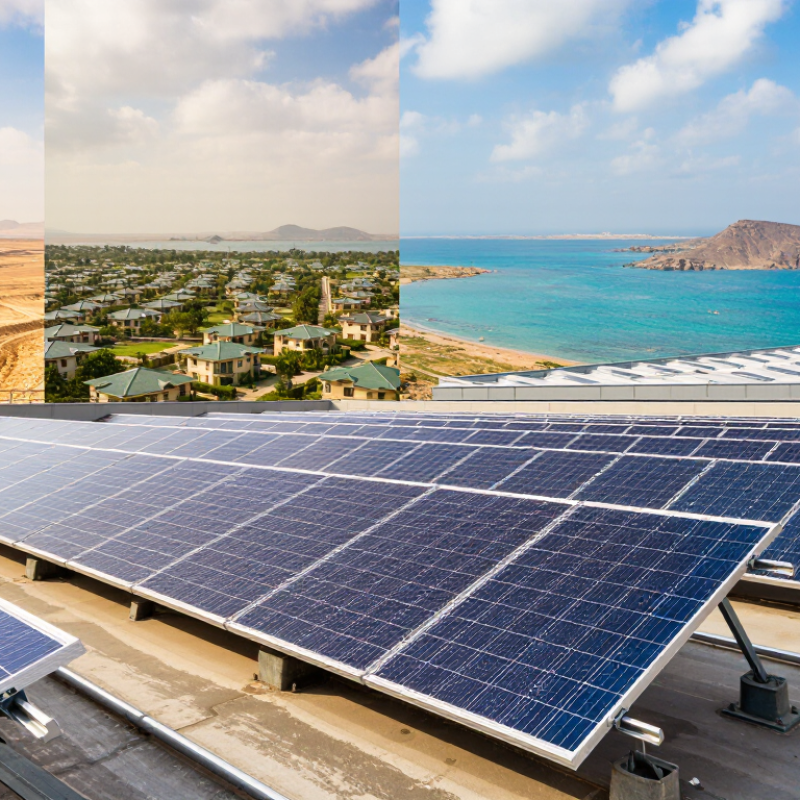
For global buyers, solar panel technology should be judged by climate, roof space, and maintenance access—not efficiency alone. Monocrystalline panels usually deliver strong output in limited areas, making them practical for dense urban roofs. Their dark surfaces can perform well, but heat still reduces production. Thin-film modules are lighter and may suit large roofs or unusual structures. They often need more space, though. Bifacial panels can collect reflected light from the rear, especially above bright ground. Results vary sharply with mounting height, surface color, and local dust.

Field assessments often show that measured yield matters more than brochure ratings. A panel rated highly in a laboratory may produce less under haze, salt air, snow, or partial shade. Temperature coefficients, warranty terms, degradation rates, and testing records deserve careful checking. No technology wins everywhere. Even a promising design can disappoint when installers ignore ventilation or cable routing. Buyers should request site-specific simulations and compare annual energy estimates, not only peak wattage. Independent certification adds confidence, but it does not replace inspection.

Tips: Ask for performance data across hot and cold conditions. Check whether qualified technicians and replacement parts are accessible locally. Inspect the roof before choosing panel size or weight. Leave space for cleaning and safe maintenance. A monitoring system can reveal unusual losses early. Budget for inverters, mounting hardware, shipping, and future service. These details are easy to overlook.

Key Performance and Durability Factors to Evaluate

Top Clean Energy Solar Panels for Global Buyers

Key Performance and Durability Factors to Evaluate

Selecting solar panels for international projects requires more than comparing efficiency percentages. A panel rated at 22% may perform differently under heat, dust, shade, or weak sunlight. Check the temperature coefficient, which shows how quickly output falls as temperatures rise. A lower loss rate often matters in hot regions. Low-light performance also deserves attention, especially where winter skies remain cloudy.

Durability begins with materials and testing. Look for verified resistance to heavy snow, strong wind, hail, humidity, and ultraviolet exposure. Salt mist testing is important for coastal installations. Inspect the frame corners, glass thickness, junction box, and connector design. Small weaknesses can become expensive problems after years of rain. Independent testing under recognized international standards adds useful evidence, but laboratory results cannot represent every rooftop.

Degradation rates should be reviewed alongside warranty terms and service support. Panels may lose output slowly, yet poor installation can accelerate damage through uneven mounting or trapped moisture. Field inspections often reveal more than product sheets. I still question very impressive efficiency claims when operating conditions are unclear. A slightly less efficient panel may deliver more energy over time if it handles heat, wind, and maintenance limitations better. Even careful buyers can overlook local replacement logistics. That mistake is costly.

Top Clean Energy Solar Panels for Global Buyers: Key Performance and Durability Factors to Evaluate

This chart compares representative technology-level benchmarks rather than individual brands. Module efficiency values reflect typical commercial ranges. Estimated retained output after 25 years is modeled from commonly published degradation assumptions: first-year degradation followed by annual degradation. Actual results vary with climate, installation quality, operating temperature, humidity, and product construction.

Global Standards, Certifications, and Market Requirements

Global solar procurement is expanding quickly. The IEA’s Renewables 2024 report estimates nearly 420 GW of solar PV was added worldwide in 2023. That scale increases the need for consistent technical evidence, not attractive brochures.

Buyers should verify IEC 61215 for module design and performance qualification. IEC 61730 addresses electrical and fire safety. IEC 62941 supports manufacturing quality systems and production consistency.

These standards do not mean identical results in every climate. Heat, humidity, salt mist, snow, and dust can expose weaknesses differently. Request test conditions, laboratory accreditation, and complete reports.

Certification is only one part of market access. In the European Union, suppliers may need documentation related to CE requirements, RoHS, REACH, and waste obligations. North American projects often require nationally recognized safety testing, local electrical rules, and fire classification evidence. Grid-connected systems may also need country-specific inverter and interconnection approvals.

Details matter.

The IEA PVPS Trends 2024 report recorded global PV capacity above 1.4 TW at the end of 2023.

Buyers should therefore examine traceability, warranty assumptions, serial-number control, and factory inspection records. A certificate can confirm compliance at a defined moment, but it cannot guarantee every shipment. That uncomfortable gap deserves attention. Lower price may reflect weaker documentation, not better efficiency. Suppliers should disclose degradation testing, transport packaging, and complaint-response procedures before contracts are signed.

How to Select Solar Panels for Different Applications

Selecting solar panels starts with the application, not the highest efficiency number. Utility-scale projects need strong energy yield, low degradation, and simple maintenance across large areas. Rooftops require lighter modules, suitable dimensions, and safe installation around vents and shaded sections. The IEA Photovoltaic Power Systems Programme reported more than 400 GW of new solar capacity in 2023, showing how widely these design decisions now matter.

For hot, humid regions, check temperature coefficients, corrosion resistance, and moisture testing. A panel with a lower temperature coefficient can lose less output during a 40°C afternoon. In snowy areas, stronger mechanical-load ratings and a practical tilt angle matter more than small efficiency gains.

Bifacial modules can improve production on reflective surfaces, but their benefit depends heavily on spacing, ground color, and installation height. Some projects assume too much. That is a costly mistake.

For commercial roofs, compare annual energy yield rather than laboratory efficiency alone. Review independent test data, IEC 61215 and IEC 61730 compliance, product warranties, and the manufacturer’s degradation assumptions. NREL research commonly places typical crystalline-silicon degradation near 0.5% annually, though site conditions can change the result. IRENA reported global solar capacity exceeding 1.4 TW by the end of 2023, yet local weather still decides performance. Request a site-specific simulation using shading, temperature, wind, and soiling data. Real roofs are rarely perfect.